Research and Inspiration
Before I write a novel I do lots of research. Some times this gets a bit out of hand, to the point that I’m effectively a researcher with a writing sideline. For research I look to non-fiction for a factual basis, but also to fiction and story telling for tone and for seeing how other storytellers tackled problems.
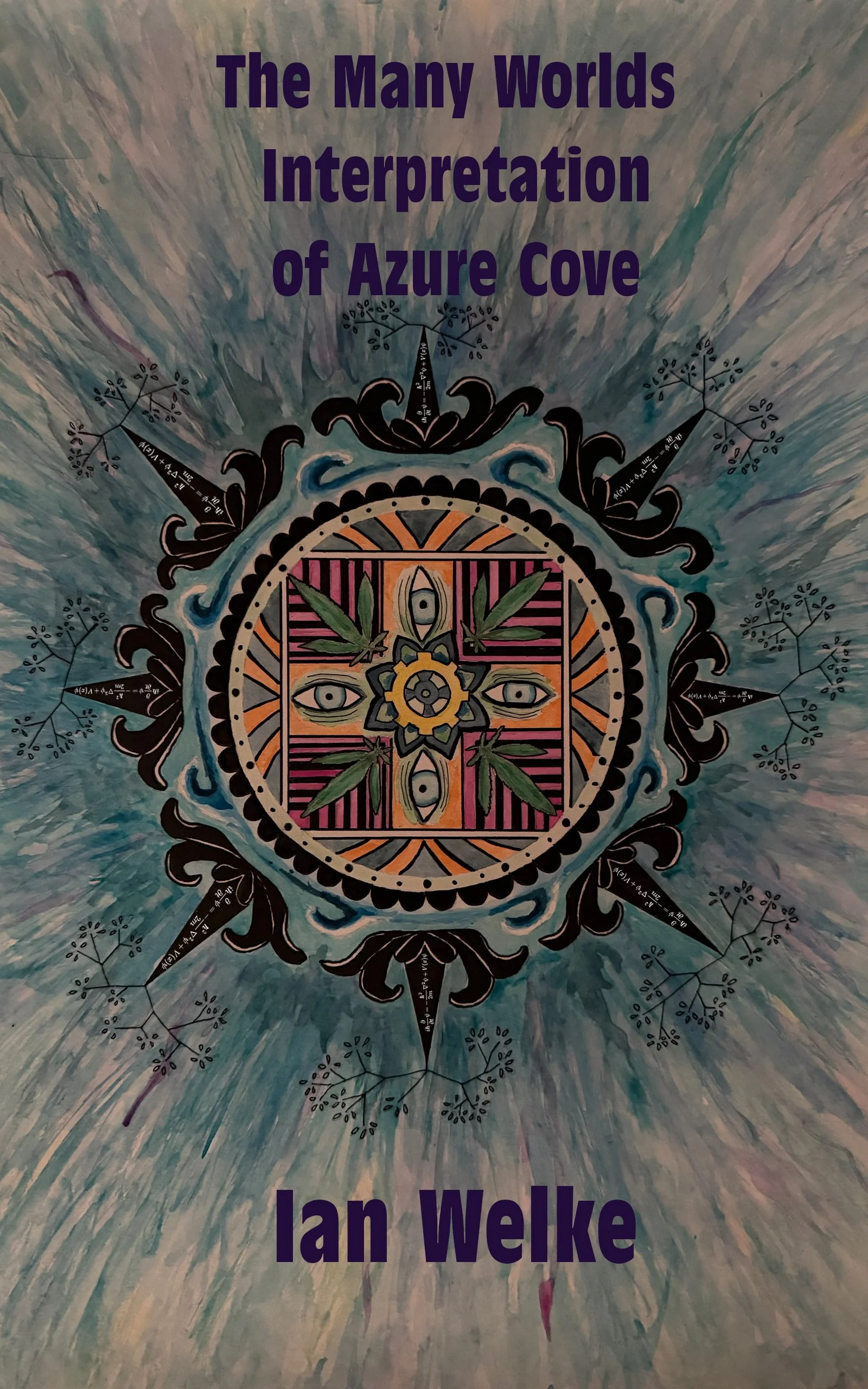
Here is a partial list of what I read and watched when I was researching The Many Worlds Interpretation of Azure Cove.
Nonfiction:
Paul Halpern: The Allure of the Multiverse was an excellent go to book. I recommend it for everyone with an interest in multiverse theory, but especially for science fiction writers.
Sean Carroll: In The Azure Cove Assignment, Max says his two favorite non fiction books are Barbara Tuchman’s A Distant Mirror and Sean Carroll’s The Big Picture. I picked those two for Max because I love those books. For The Many World’s Interpretation of Azure Cove, Carroll’s work was a huge influence. His Biggest Ideas in the Universe series, Space, Time, and Motion and Quanta and Fields were great sources. The most direct influence and resource came in his Great Courses Lecture series The Many Hidden Worlds of Quantum Mechanics.
Max Tegmark: I don’t know if it was his book Our Mathematical Universe or reading articles of his somewhere else that started me down this path but I think Tegmark was the first scientist I read who wrote seriously about the possibility of other universes. I think it was reading Tegmark’s articles/book that first lead me to Sean Carroll.
Fiction:
Favorite Stranger Things episode: The Flea and the Acrobat. There are a lot of posts on this blog about how much I adore Stranger Things. The Flea and the Acrobat episode in particular where there’s a wake held for Will, and superheroic middle school science teacher Mr. Clarke is asked by his students about other universes is my favorite episdoe. Naturally Mr. Clarke assumes they’re wondering if there’s another universe where their friend lived, but even when he poses this he says to his middle school students, “You boy’s have been thinking about Hugh Everett’s ‘Many Worlds’ interpretation, haven’t you?”
Fringe: One of the biggest influences on the Azure Cove series. Fringe has a great cast of characters dealing with weird science events. Fringe is a lot darker than I hope Azure Cove will ever go, but it is great and has an obvious parallel with the other worlds, although in Fringe the multiverse is more limited to two main worlds.
Everything Everywhere All At Once: Possibly the best multiverse movie that ever was or will ever be.
Star Trek: The Mirror Mirror episode was but one of the alternate worlds episodes. There are lots of alternate world Trek episodes. I think my favorite is the Deep Space Nine episode where Cisco is a 1950s science fiction writer in a mental hospital.
Twin Peaks: There were many influences on the setting. In addition to Fringe and Eureka I think of Gravity Falls as a place where weird science things happen. But I think that it’s not just being a place where weird things and quirky characters live, Twin Peaks had a big influence on the tone of the Azure Cove series. I love how they managed to meld the absurd, the frightening, the sentimental, and the bizarre and it all comes together despite these seemingly disperete parts. If I have achieved at least a fraction of that I’ll be very happy.
Doctor Who: Doctor Who has many stories about alternate worlds and realities, then there’s the matter of tone. I tried to keep this story from getting dismal, and Doctor Who was an inspiration in being more optimistic and aspirational. Whatever happened in that show, the Doctor always had this Bugs Bunny like capacity for thumbing his nose at the well-armed goons in authority. I wanted that spirit for my team of thinkers.
These were the main sources of background and inspiration for The Many Worlds Interpretation of Azure Cove. I am already compiling a list to read and check out for the next book in the Azure Cove series.