The Challenge of Writing Optimistic Science Fiction
When I set out to write the first Azure Cove book, I made a list of things I wanted the series to remain true to, sort of like the list of rules Chuck Jones had for the Road Runner.
Most of my rules had to do with the theme of the series, mainly that education and more importantly learning must be part of the story and encouraged. But also I wanted the story to always remain optimistic.
I have several reasons for shooting for optimism. First I feel like reading dystopian fiction while you’re stewing in a dystopia feels unnecessary. There are very good dystopian novels still coming out and they’re worth reading. But reading a novel and writing one are different levels of time commitment. And I don’t want to spend that much time writing one again unless things are much improved in the real world.
When I say I don’t want to spend time writing a dystopian novel again, that’s because I’ve written several. Two of my novels, End Times at Ridgemont High and Four Corners, were cosmic horror that ran to the apocalyptic. My first novel, The Whisperer in Dissonance, was a dystopian science-fiction book about people being replaced with AI chatbots. The tendency of dystopian fiction to be unfortunately predictive, made me wonder if we writers weren’t causing the problems around us, in some sort of Philip-K-Dickian metafiction. The fact that billionaire douchebags seem to read these things and decide that the dystopias sound aspirational doesn’t help matters. But this also got me thinking, what if we could reverse that? What if we could write something that should be aspirational and have people try to mold reality into that instead?
Writing optimistic fiction is difficult as is. When you’re writing a dystopia, there’s tension built into the setting. Writing optimistic fiction encouraging learning and knowledge seekers as heroes is all the more difficult. Much of western storytelling starting with the Bible is all about knowledge being forbidden. Frankenstein’s hubris is seeking knowledge that was supposedly meant to be god’s alone. Prometheus stole fire from the gods so that man could survive, the modern Prometheus was stealing the secret to life and death.
Somehow when I wrote The Azure Cove Assignment, the optimism came easily. It was toughter going with the second book. I wrote the first half of The Many Worlds Interpretation of Azure Cove in October of 2024. All seemed to be going well enough. Then the election happened and to say the least, my sense of optimism took a hit. Enough of a hit that I had to put the book on the shelf for a few months while I gathered my thoughts.
Fortunately when I went back and read it I found the first few chapters funny enough that I could get going again on it. As I wrote much of the second act became about how to regroup and work towards improving ourselves when the world around us is bleak. Some of the sense of humor became a more gallows type but I hope that I manage to retain a sense of overall optimism, even if it’s not the same sense of optimism I set out with. Writing the book became more directly about people overcoming the despair and defeating fascists than it had been. That felt necessary for the time we now find ourselves in.
Hopefully the sense of optimism comes through. I am confident that the encouragement of knowledge and learning definitely remains.
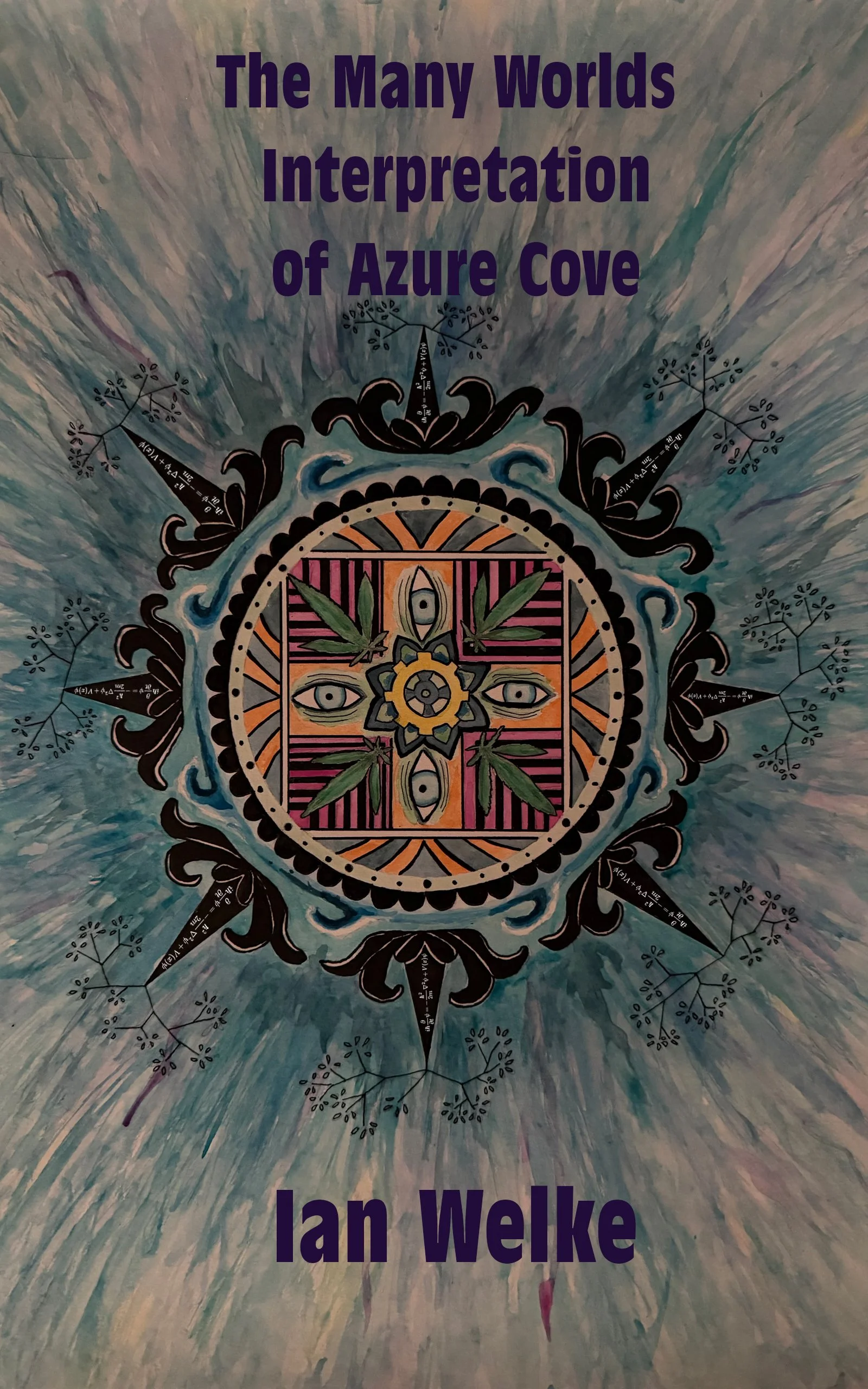
The Many Worlds Interpretation of Azure Cove is out now in paperback and on Kindle.